


When planning renovations or system installations at home, such as plumbing lines, electrical wiring, or HVAC systems, cutting through concrete may be unavoidable. It is where concrete coring becomes an essential step in the process.
Concrete coring is a precise technique that allows you to create clean, round holes in concrete walls, floors, or ceilings without causing damage to the surrounding material. However, if you are new to this process, you may be wondering just how much time it takes. The answer is not fixed because several key factors affect the duration.
On average, Concrete Core Drilling can take anywhere from 10 minutes to over an hour per hole. The exact time depends on the size of the hole, the density and thickness of the concrete, the equipment used, and whether a professional or a DIYer is doing the work.
Let us look closer at what influences this timeframe and how to prepare for your own coring project.
What Is Concrete Coring?
Concrete coring involves using a core drill fitted with a diamond tipped bit to bore a circular opening into a concrete surface. Unlike other methods of cutting, this process creates precise openings with minimal vibration or cracking. That makes it ideal for sensitive environments or projects that require structural integrity to remain intact.
Common reasons for concrete coring include:
- Installing new electrical lines or plumbing systems
- Adding HVAC ductwork or air vents
- Running utility lines for water, gas, or drainage
- Making modifications during home remodeling or renovation
Factors That Determine Coring Duration
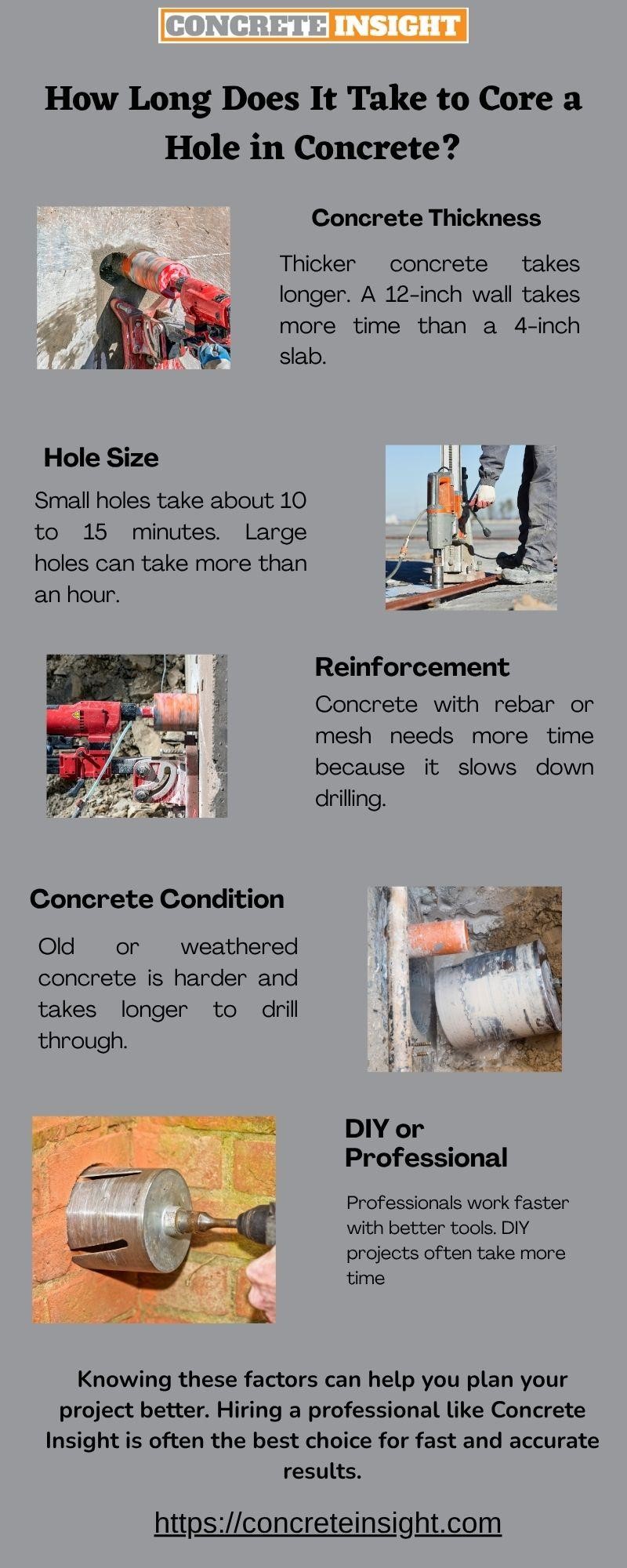
Several conditions will determine how long it takes to complete a hole:
1. Thickness of the Concrete
Thicker slabs naturally take more time. A four inch patio slab can be drilled much faster than a twelve inch foundation wall. The deeper the drill must go, the longer the process will take.
2. Hole Diameter
The width of the hole also matters. A small, two inch hole may be done in under fifteen minutes, while an eight inch or larger hole could take more than an hour.
3. Concrete Reinforcement
Concrete that contains rebar, mesh, or embedded metal will slow the drilling process. Hitting rebar often requires switching to a special bit or adjusting the drill speed and pressure, which adds time.
4. Condition of the Concrete
Older or heavily weathered concrete can be harder and more abrasive, which wears down the core bit faster and slows the drilling. Newer concrete is often easier to penetrate.
5. Professional vs. DIY Approach
If you are attempting this yourself, especially with rented or handheld equipment, the job could take much longer. Professionals have access to industrial grade rigs and have the experience to complete holes quickly and accurately. What might take a homeowner several hours may take a contractor only thirty minutes.
Tools and Techniques That Impact Speed
The type of equipment and drilling method can also affect how fast the job moves.
Handheld Core Drills vs. Mounted Rigs
Smaller holes may only require a handheld drill. These are ideal for minor projects but are slower and require physical effort. Mounted rigs, on the other hand, provide more stability and power. These machines are commonly used by professionals and can handle larger or deeper holes with greater speed and precision.
Diamond Core Bits
Diamond tipped bits are the most efficient choice for coring. They cut through hard surfaces cleanly and are usually cooled with water during the process. The water prevents overheating, reduces dust and helps the bit last longer.
Dust Management and Cooling Systems
Coring with integrated water systems or vacuum attachments not only improves safety but also increases efficiency. Keeping the drilling area clean and the tool cool allows the job to move along without unnecessary interruptions.
Estimated Time by Hole Size
To better understand what to expect, here are some average time estimates for various hole sizes:
- Small Holes (1 2 inches): These may take 5 to 15 minutes each and are often needed for wires or small pipes.
- Medium Holes (3 6 inches): These typically take 15 to 30 minutes depending on the depth. They are used for ductwork or utility lines.
- Large Holes (8 inches and above): Expect 30 minutes to over an hour for each. These are often required for major installations or structural modifications.
Please note these estimates can change based on your specific conditions.
Should You Hire a Professional?
If your project involves more than one hole, especially in thick or reinforced concrete, hiring a professional is the smarter choice. Experienced crews have the right tools, techniques, and knowledge to finish the job quickly and safely. For simple or shallow holes, a confident DIYer can complete the task with the proper tools and preparation.
Before starting, consider how much time you are willing to invest and whether accuracy is crucial to the final result.
Final Thoughts
Concrete coring is a powerful and efficient solution when you need to create precise openings in tough materials. While small holes may only take a few minutes, more complex jobs require time and the right equipment. Understanding the variables involved will help you plan your project better and decide whether to go the DIY route or call in a pro.
For reliable and expert Concrete Core Drilling, consider reaching out to professionals like those at Concrete Insight, who bring years of experience and top quality equipment to every job.
Comments