
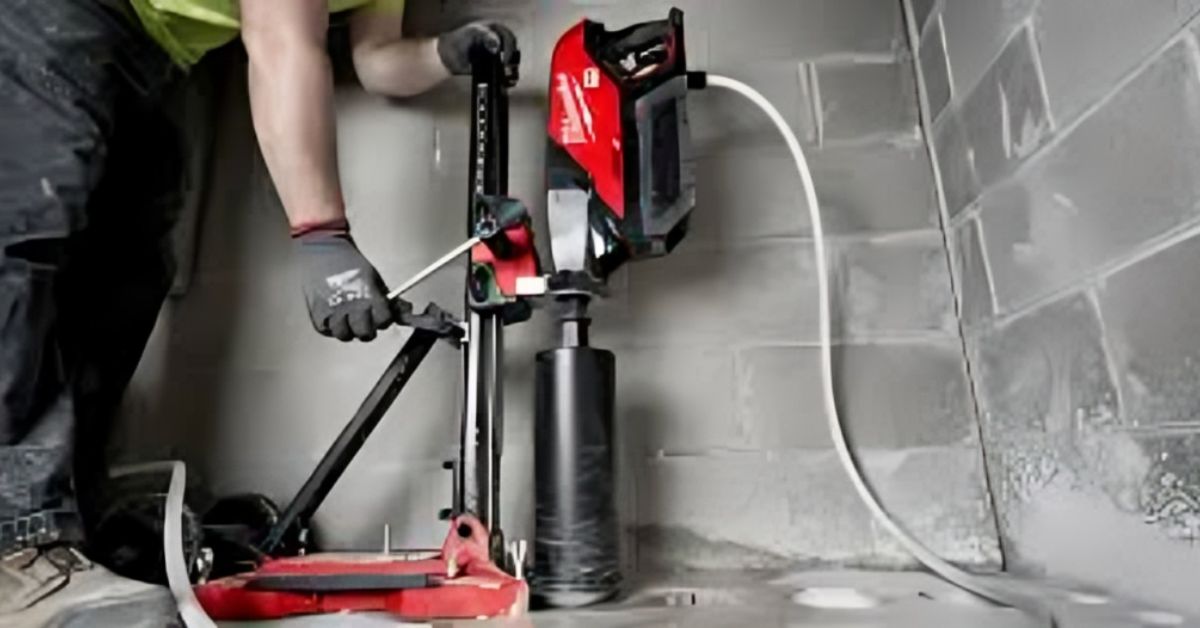

Ever so often, during the process of renovating a building, navigating through a thick layer of concrete proves to be the biggest challenge. However, technological advances in construction machinery have eliminated this problem. With advanced core drilling machines, there are no concrete structures that can stop you from achieving your planned renovation.
Core drilling machines not only help navigate through concrete but also help preserve the structural integrity of buildings. In this blog, we will discuss what these machines are, their types, how to choose the right drill, and common mistakes to avoid when using them.
What are Core Drilling Machines?
Core drilling machines are specialized tools used by concrete services to drill cylindrical holes through concrete structures. Unlike regular drill machines, these tools are much more precise and cause significantly less vibration, helping maintain the structural integrity of the building. Some of the parts in these machines are drill bits, motors, drill rigs and a water supply system.
Factors to Keep in Mind While Choosing the Core Drilling Machine
Whenever you're dealing with something structural, dealing with extra caution is the name of the game. One miscalculation or slip-up can cause a big mess for both the contractor and customer to deal with. With the help of core drilling machines, these issues can be significantly avoided. But merely using these machines is not enough; one needs to carefully consider a few things before choosing the right drill for you.
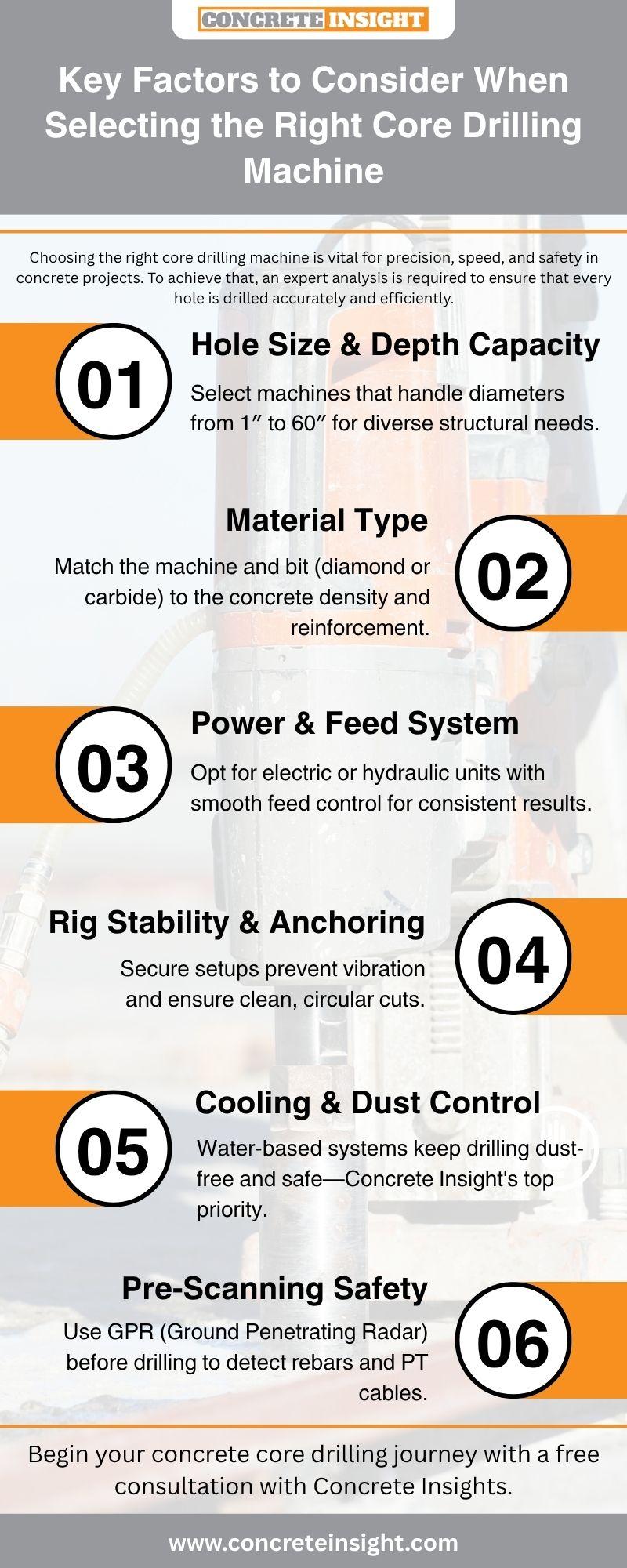
- Finding the Right Drill: Before anything, there needs to be a clear understanding between the customer and the contractor of the hole's diameter. The size of the hole will decide the type of rig to be used for drilling. If the hole is small, the contractor might opt for a compact drill such as Hilti DD-160. However, if a larger hole is needed, they may use advanced machines such as the Hilti DD-250.
- Area in the Vicinity: The concrete composition around the drilling area also plays a significant role in selecting the drill. If the area is in the midst of heavy rebar or conduit, the core drilling service may require a diamond core bit rather than a standard carbide-coated bit. To help in making that decision, concrete services may use tools such as the Windsor Probe ASTM C-803.
- Job Site Variables: Every job site affects a contractor's drilling capabilities in unique ways. Factors such as power availability, available space, and the area to be drilled play a significant role in determining the type of core drilling machine to use.
How to Prepare the Job Site for Precision Drilling?
Before beginning the drilling, any expert drilling service will conduct a few steps and make proper preparations to ensure precise drilling. Here are some steps they might take to prepare the job site.
- Conducting Surveys: The first step in preparing any job site is to conduct thorough surveys of the area to be drilled and the surrounding area. To help with this, they might use a Ground Penetrating Radar (GPR). These radar maps out the area and easily detect materials such as metal, plastic, and PVC. But that's not all. Modern radars such as GSSI Structure Scan Pro SIR 400 can also detect air pockets and voids.
- Layout and Proper Alignment: Once the surveys are complete, the next step is to plan a proper layout to ensure the drill is aligned correctly. To help ensure correct alignment, the drill rig is bolted down with proper suction pads, and the hole is aligned with laser-like precision. This is essential to precision, as even a millimeter difference can ruin the plans.
- Final Touches Before Drilling: After surveys and alignment, you're almost ready for the final steps before drilling begins. In these last few steps, the contractor selects the correct drill bit for the core drilling machine. They will also ensure that the water-cooling systems and the power required are functioning correctly, so there are no delays or stoppages once drilling begins.
Some Common Mistakes to Avoid While Using Core Drill Machines
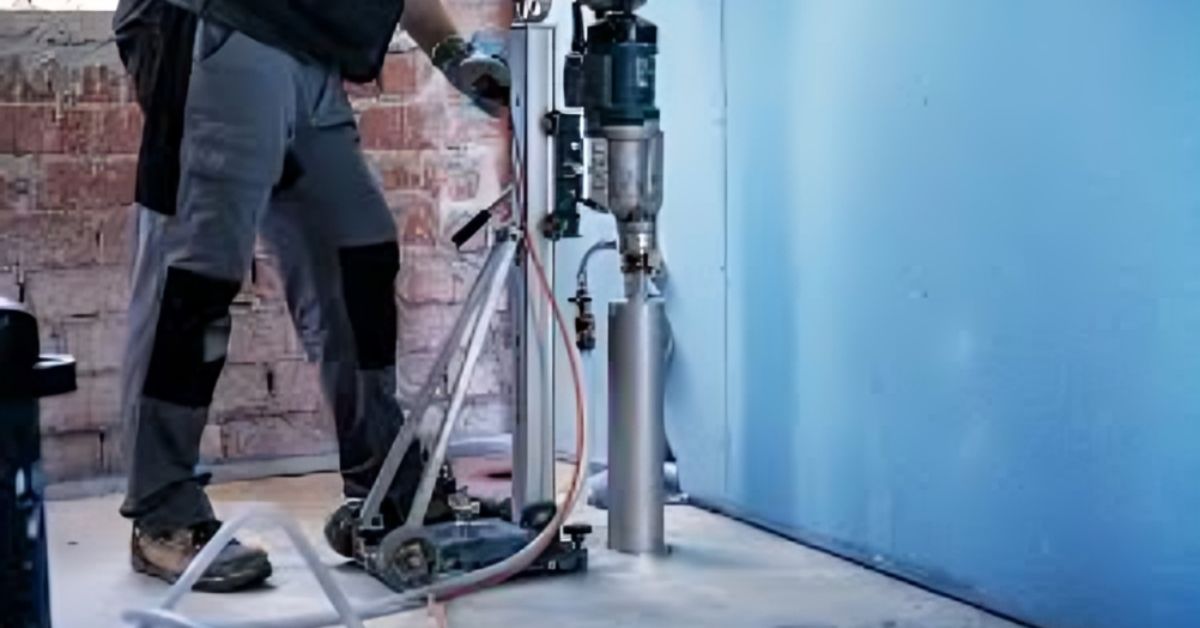
Whenever there are professional-grade tools involved in the scheme of things, there are bound to be some mistakes that you need to avoid. Core drilling machines are no different in this. Here are some common mistakes to avoid at all costs if you want precise cuts.
- Choosing the Wrong Drill Bit: This is one of the most common mistakes made while operating drilling machines. To curb that, all calculations and survey studies must be double-checked.
- Skipping GPR Studies: While quality drilling experts will never skip such an essential step, there have been instances when such basic studies are skipped to save time and money. Without these studies and analyses, there is no telling what lies beneath the concrete layer, and as a result, there is a risk of damaging the drill bit, causing delays.
- Unstable Setup: A stable drilling setup is essential to precision. If, during setup, the drill rig is not bolted down properly or the suction cups are not used as required, there is a good chance that the drill will walk, resulting in inaccurate holes and even some more expensive damage to the structure.
- Poor Cooling System: For drills working on thick concrete slabs, proper cooling is paramount. Most high-end core drilling machines are equipped with a water-cooling system. Not only do these systems help extend a drill bit's lifespan, but they also trap dust, thereby reducing after-drilling cleanup.
Conclusion
When it comes to complex tasks such as concrete drilling, it is always better to hire a professional service equipped with tools like core drilling machines. However, merely hiring them is not enough. Both the customer and the contractor must ensure all necessary steps are taken to achieve error-free cuts.
If you are looking for a reliable concrete core drilling service in the Virginia and Maryland area, check out Concrete Insight and book your free consultation today.
Comments