
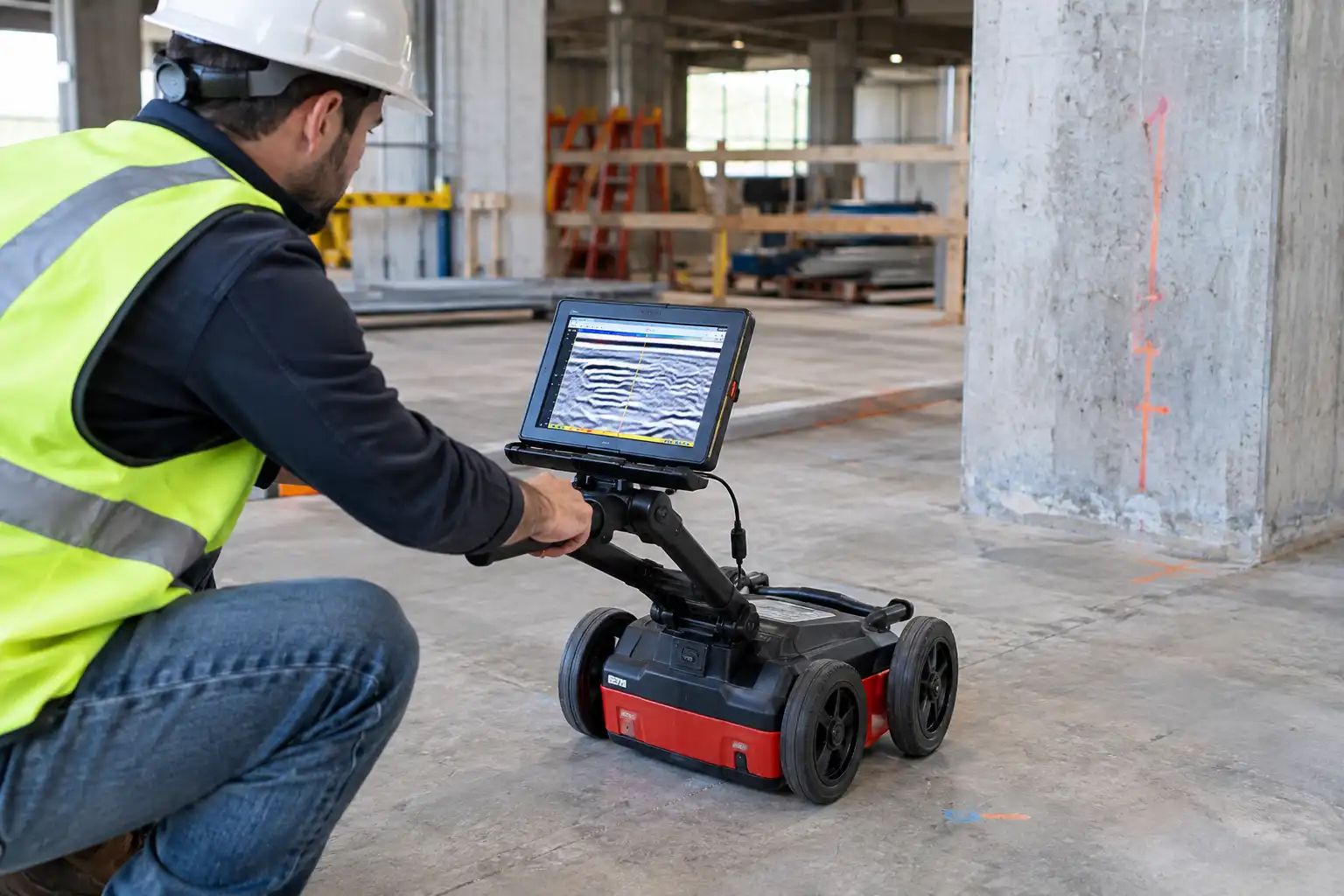

Commercial concrete structures contain much more than what is visible on the surface. Reinforcing steel, post-tension cables, electrical conduits, plumbing, voids, and other embedded elements can exist beneath a slab, wall, column, or deck. When contractors need to drill, core, cut, anchor, or modify these structures, knowing what lies beneath the surface is essential.
This is where GPR scanning in Virginia can provide valuable subsurface information without requiring destructive testing. Ground Penetrating Radar, commonly known as GPR, uses radar signals to investigate concrete and identify subsurface features. The technology can help construction teams understand existing conditions before beginning work, reducing uncertainty and helping them plan construction activities more carefully.
For commercial projects, where a single mistake can cause project delays, repairs, safety concerns, or damage to critical structural components, concrete scanning can become an important part of the pre-construction and renovation process.
What Is GPR Scanning?
Ground Penetrating Radar is a non-destructive testing technology that sends electromagnetic signals into a material and analyzes the reflected signals to identify changes beneath the surface.
When a GPR scanner moves across a concrete structure, the radar signals interact with different materials and interfaces. The resulting data can help trained technicians identify and map objects such as reinforcing steel, post-tension cables, conduits, pipes, voids, and other subsurface anomalies.
Unlike destructive inspection methods that require cutting or removing concrete, GPR allows technicians to investigate the structure while leaving the concrete intact.
For commercial construction, this can be particularly useful when the project involves an existing building where original construction drawings may be incomplete, unavailable, or different from the current condition of the structure.
Why Do Commercial Buildings Need Concrete Scanning?
Commercial buildings frequently undergo modifications throughout their service life. A property may have new electrical systems, HVAC equipment, plumbing, lighting, partitions, equipment anchors, or other additions that were not part of the original construction.
As a result, relying exclusively on old drawings or assumptions about what is inside a slab may not provide enough information before drilling or coring.
GPR scanning in Virginia can help construction professionals investigate existing concrete before making penetrations or modifications. The information gathered from the scan can support decisions about where drilling, coring, anchoring, or cutting may be performed while avoiding identified subsurface features.
This can be especially important for projects involving:
- Commercial office buildings
- Hospitals and healthcare facilities
- Schools and educational buildings
- Parking garages
- Retail properties
- Industrial facilities
- Warehouses
- Hotels
- High-rise buildings
- Government facilities
- Concrete decks and elevated slabs
- Renovation and adaptive reuse projects
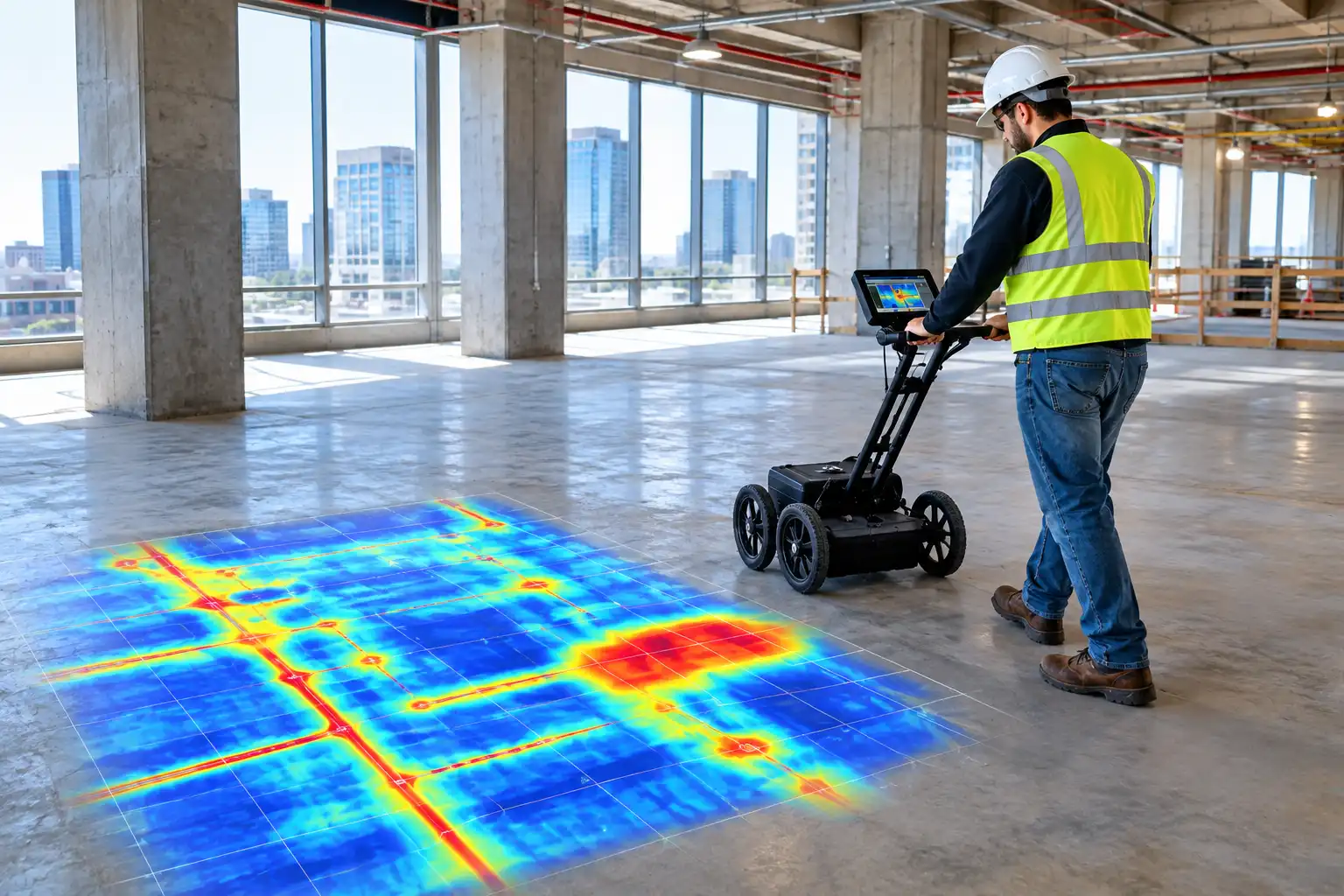
What Can GPR Detect Inside Concrete?
One of the biggest advantages of GPR technology is its ability to investigate several types of subsurface conditions without opening the concrete.
Rebar
Reinforcing steel provides structural strength to concrete. Accidentally cutting important reinforcement during drilling or coring can compromise the intended reinforcement arrangement and potentially create additional repair requirements.
GPR can help map the position and approximate depth of reinforcing steel so contractors can plan work around identified reinforcement.
Post-Tension Cables
Post-tensioned concrete requires particular caution because the embedded tendons are tensioned as part of the structural system.
Drilling or cutting through a post-tension cable can create serious safety and structural concerns. GPR can be used to locate and map suspected PT cables before contractors perform work that penetrates the slab.
Electrical Conduits
Electrical conduits can be embedded within concrete slabs, walls, and other structures. A drilling operation that unexpectedly encounters an electrical conduit can damage infrastructure and create additional project complications.
Concrete scanning can help identify potential conduit locations before penetration work begins.
Pipes and PVC
Depending on the material, size, depth, and surrounding conditions, GPR may also help identify non-metallic objects such as PVC and other piping or conduits.
However, GPR results require professional interpretation. Not every subsurface object produces the same signal, and site conditions can influence what the equipment can detect.
Voids and Air Pockets
GPR can also help identify anomalies associated with voids, air pockets, poor consolidation, or other changes beneath or within concrete.
Identifying these conditions can give engineers and contractors additional information when investigating existing structures or planning modifications.
Slab Thickness
Another useful application is estimating concrete thickness. Understanding the thickness of a slab can help construction professionals evaluate conditions before drilling or making other penetrations.
How Does GPR Scanning Work on a Commercial Project?
A professional GPR investigation generally begins with an understanding of the project requirements.
The scanning team first identifies the areas where drilling, coring, anchoring, cutting, or other construction activities are planned. The technician then evaluates the surface and scans the designated area using appropriate GPR equipment.
The radar data is interpreted to identify subsurface features. Depending on the project, findings may then be marked directly on the concrete surface to help the construction team understand where identified objects are located.
The process can generally be viewed in several stages:
1. Project Assessment
The scanning team reviews the planned work and determines what areas need to be investigated. Project drawings, drilling locations, structural information, and site conditions can all help establish the scope.
2. Surface Preparation
The scanning area needs to be accessible and reasonably clear of obstructions. The technician identifies the locations requiring investigation.
3. GPR Scanning
The GPR equipment is moved across the concrete surface to collect subsurface data. Multiple scan directions may be used to improve interpretation and mapping.
4. Data Interpretation
Raw radar responses need to be interpreted by an experienced technician. The objective is to distinguish meaningful subsurface features and estimate their locations and depths.
5. Surface Marking and Communication
Identified features can be marked on the slab or other concrete surface, depending on project requirements. This provides the construction team with practical information before drilling or cutting begins.
6. Construction Planning
The contractor can then use the scan findings to evaluate proposed penetration points and make informed decisions about the work.
GPR Scanning vs. Concrete X-Ray
GPR and concrete X-ray are both technologies used to investigate concrete, but they operate differently.
X-ray inspection uses radiation to create an image of internal concrete conditions and generally requires access and setup considerations on both sides of the structure. GPR, on the other hand, can often be performed from one accessible surface, which can make it practical for slabs and structures where accessing the opposite side is difficult.
GPR also does not involve ionizing radiation. This can simplify the logistics of certain commercial construction projects where maintaining normal site operations is important.
The appropriate inspection method depends on the structure, project requirements, accessibility, material characteristics, and the information required. A qualified scanning professional can help determine which approach is appropriate for a particular application.
When Should Virginia Contractors Use GPR?
There is no need to wait until a drilling problem occurs before considering concrete scanning.
GPR scanning in Virginia can be incorporated into project planning before construction activities that penetrate existing concrete. Common situations include:
Before Core Drilling
Core drilling creates circular openings through concrete slabs, walls, and other structures. Scanning beforehand can help identify embedded objects near the proposed opening.
Before Anchoring
Installing mechanical or structural anchors requires drilling into concrete. Scanning can help determine whether reinforcement, conduits, or other embedded features may be located around the proposed anchor positions.
Before Saw Cutting
Concrete cutting can extend across a larger area than a single core location. Scanning can help construction teams understand subsurface conditions along the planned cutting path.
During Renovation
Renovation projects can involve modifications to existing slabs and walls without complete knowledge of the original construction. GPR can provide additional information before demolition or penetration work.
During Structural Investigation
Engineers may need information about reinforcement placement, slab thickness, or potential anomalies when evaluating an existing commercial structure. GPR can supplement other inspection methods in these situations.
Why GPR Is Valuable for Virginia's Commercial Construction Industry
Virginia has a diverse commercial construction environment, ranging from modern office developments and large mixed-use properties to older commercial buildings undergoing renovation.
In an existing building, documentation may not always reflect every modification made during decades of occupancy. Mechanical systems may have been relocated, additional conduits may have been installed, and structural elements may be hidden behind finishes.
This is why GPR scanning in Virginia can be useful as a field verification tool.
Instead of relying solely on assumptions, construction teams can investigate the actual conditions at the work location before proceeding. The value extends beyond identifying individual objects. Better subsurface information can help contractors coordinate work, reduce uncertainty, and plan drilling or cutting activities more effectively.
Factors That Can Affect GPR Results
Although GPR is a powerful inspection technology, it is not a magic tool that can identify every object under every condition.
Several factors can influence scanning performance, including:
- Concrete composition
- Moisture content
- Depth of the target
- Target size
- Target material
- Reinforcement density
- Surface conditions
- Signal interference
- Multiple overlapping objects
- Concrete thickness
- Accessibility of the scanning area
Highly congested reinforcement can make interpretation more challenging because multiple subsurface features may produce overlapping responses.
For this reason, professional interpretation is an important part of a GPR investigation. The equipment collects data, but experienced technicians use that information alongside project knowledge and scanning patterns to interpret what the data may represent.
What Makes Professional GPR Scanning Different?
Purchasing or accessing GPR equipment does not automatically provide reliable construction information.
The quality of the result depends on several factors, including equipment selection, scanning technique, scan direction, data interpretation, technician experience, and communication of findings.
A professional provider understands that the goal is not simply to operate a radar scanner. The goal is to produce useful information that contractors, engineers, and project managers can apply to the work being performed.
GPR scanning in Virginia therefore works best when it is treated as part of the project's planning and risk-management process rather than as a last-minute step immediately before drilling.
Why Choose Concrete Insight LLC for GPR Scanning in Virginia?
At Concrete Insight LLC, we provide professional concrete scanning and GPR services designed to help contractors, engineers, and project managers understand what is beneath concrete surfaces before construction work begins.
We use the GSSI StructureScan Pro SIR 4000 system for GPR applications and provide scanning for conditions including rebar, PT cables, conduits, voids, slab thickness, and other detectable subsurface features.
Our approach combines advanced technology with experienced interpretation. We understand that every commercial project has different requirements, which is why we focus on delivering practical information that can support safer and more efficient construction planning.
With more than 25 years of experience in concrete scanning, our team serves projects throughout Virginia, Maryland, and Washington, DC.
Whether you are preparing to core drill an office building, install anchors in a commercial slab, modify an existing facility, or investigate the internal conditions of a concrete structure, we can help you gather the subsurface information needed before work begins.
Plan Your Commercial Concrete Project With Greater Confidence
Concrete may look solid and straightforward from the outside, but its internal structure can be considerably more complex. Rebar, PT cables, conduits, pipes, voids, and other features can remain completely invisible until drilling or cutting exposes them.
Professional scanning provides an opportunity to investigate those conditions before construction creates an unwanted surprise.
If your next commercial project requires drilling, coring, cutting, anchoring, renovation, or structural investigation, contact Concrete Insight LLC to discuss your requirements. Our experienced team can help determine the appropriate scanning approach and provide the subsurface information needed to plan your work more confidently.
Contact Concrete Insight LLC today for professional GPR scanning in Virginia and take the guesswork out of your next concrete project.
Frequently Asked Questions (FAQs)
Q-1. What is GPR scanning used for in commercial buildings?
Ans: GPR scanning is used to investigate subsurface conditions in concrete without destructive testing. It can help locate rebar, post-tension cables, conduits, pipes, voids, and other detectable features. It can also help estimate concrete slab thickness.
Q-2. Should concrete be scanned before core drilling?
Ans: Yes. Scanning before core drilling can help identify embedded features near proposed drilling locations. This information allows contractors to evaluate drilling locations more carefully and reduce the risk of striking reinforcement, PT cables, conduits, or other detectable objects.
Q-3. Can GPR detect post-tension cables inside concrete?
Ans: GPR can be used to locate and map post-tension cables within concrete. Because PT systems are structural components under tension, their locations should be investigated before drilling, coring, anchoring, or cutting work that could intersect them.
Q-4. Does GPR damage concrete?
Ans: No. GPR is a non-destructive inspection method. The scanner collects radar data from the concrete surface without requiring the concrete to be cut or removed. This makes it useful for investigating existing commercial structures while preserving the structure being inspected.
Comments