

Concrete slabs can appear solid and intact on the surface while hidden separation is developing just beneath them. Concrete delamination testing helps identify these concealed areas before they progress into visible deterioration, surface failure, or costly repairs.
One established approach is sounding, a non-destructive inspection method in which an inspector listens for changes in the sound produced when the concrete surface is tapped, dragged, or struck. ASTM D4580 describes sounding procedures for measuring delaminations in concrete bridge decks, including chain drag, electro-mechanical sounding, and rotary percussion.
But how can a simple change in sound reveal something that cannot necessarily be seen? The answer lies in the way delaminated concrete responds to impact.
What Is Delamination in Concrete?
Concrete delamination occurs when a layer of concrete separates from the surrounding material, forming a horizontal or near-horizontal zone beneath the surface.
It can result from corrosion-related expansion, trapped moisture or air, inadequate consolidation, or improper placement and finishing. In its early stages, delamination may not be visible, making detection more challenging.
As separation develops, the affected concrete responds differently from sound, well-bonded concrete. This change in response is what makes it sound useful for identifying potential delaminated areas during concrete inspection and testing.
How Does Sounding Detect Concrete Delamination?
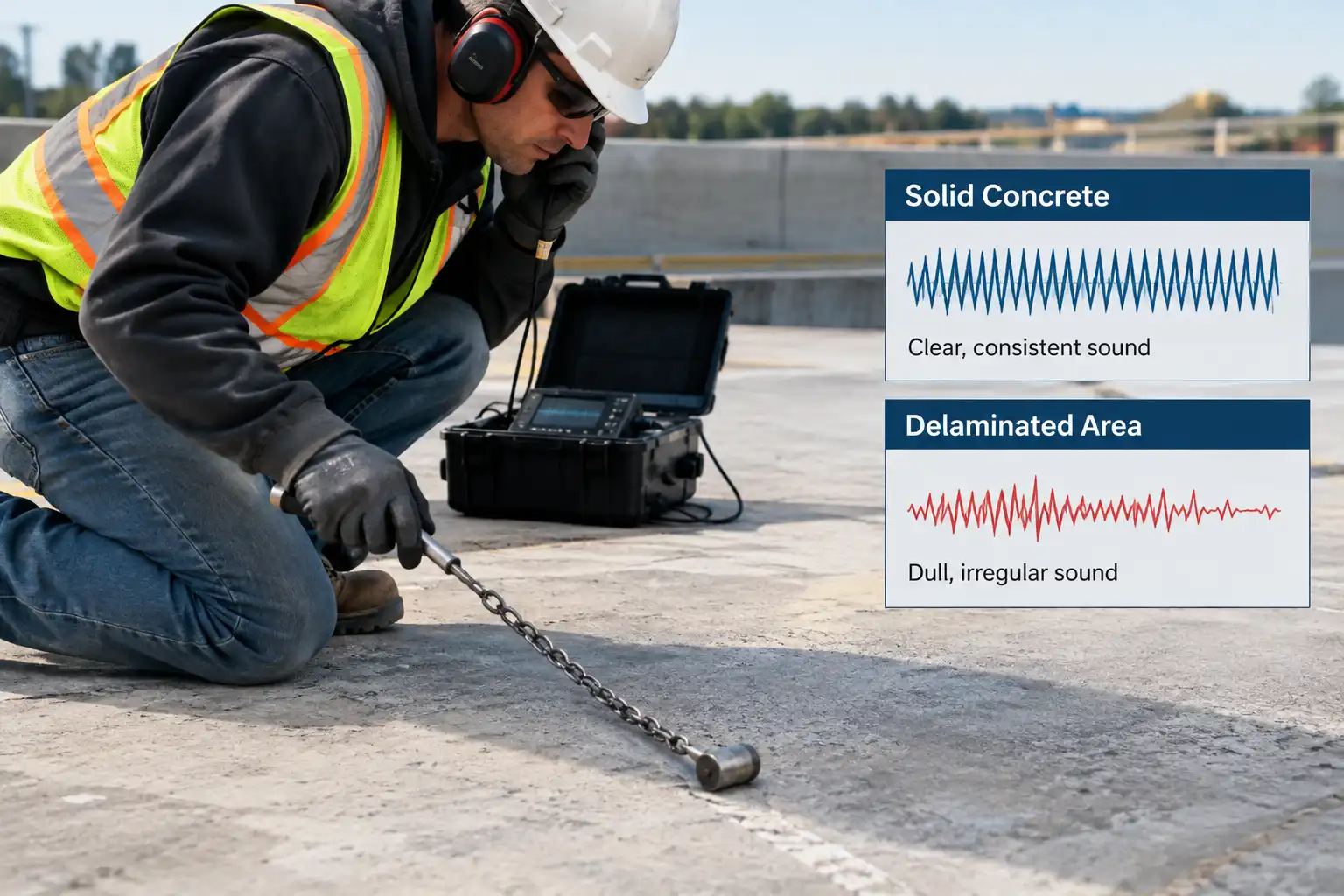
Concrete delamination testing uses changes in sound to identify areas where concrete may have separated beneath the surface. When a sounding tool contacts sound, well-bonded concrete, it typically produces a clear, sharp, or ringing response.
Over a delaminated area, the separated layer can vibrate differently, creating a dull, hollow, or drummy sound. This contrast allows inspectors to identify potential delamination that may not be visible during a surface inspection.
Similar to tapping a solid material versus a drum, the underlying separation changes how the concrete responds to impact, helping experienced professionals locate areas requiring further evaluation.
What Is ASTM D-4580 Sounding?
ASTM D4580 is a standard practice for concrete delamination testing in bridge decks by sounding. The current ASTM D4580-23 standard identifies three sounding procedures:
- Electro-mechanical sounding
- Chain drag
- Rotary percussion
Each method uses a different way of creating and evaluating the surface response. Although ASTM D4580 specifically addresses concrete bridge decks, the underlying sounding principle is useful for understanding how delamination identification works: apply a controlled impact or contact to the concrete surface and evaluate the resulting acoustic response.
The appropriate method depends on the structure, surface conditions, inspection requirements, and project circumstances.
How Does the Concrete Sounding Test Work?
A typical sounding inspection follows a practical sequence.
1. Inspect the concrete surface
Before sounding begins, the surface is assessed for visible conditions such as cracks, spalls, exposed reinforcement, previous repairs, or other defects. However, the absence of visible damage does not necessarily mean the concrete is free from delamination. One of the benefits of sounding is its ability to identify subsurface areas that may not yet be obvious visually.
2. Prepare the inspection area
The surface should be suitable for the selected sounding method. Dirt, loose debris, or other surface conditions may interfere with inspection. For larger areas, inspectors may establish a systematic survey pattern or grid so suspected delaminations can be located and documented consistently. FHWA guidance describes using a grid and marking identified areas during sounding surveys.
3. Apply impact or contact to the surface
The inspector then moves the selected sounding equipment across the concrete. Depending on the procedure, this could involve dragging a chain, using an electro-mechanical sounding device, or operating a rotary percussion tool. ASTM D4580 identifies all three approaches.
4. Listen for changes in sound
This is the critical part of the inspection. A consistent, clear response generally indicates sound concrete, while a dull, hollow, or drummy response can indicate an area of delamination. The change in sound helps the inspector distinguish potentially defective areas from surrounding concrete.
5. Identify and map suspected areas
Once an unusual response is detected, the area can be outlined or documented so its approximate location and extent can be evaluated. Sounding is therefore not simply about hearing a different noise. It is a systematic method of locating areas that warrant further assessment.
What Tools Are Used for Concrete Sounding?
Different sounding procedures in concrete delamination testing use different equipment.
Chain Drag
Chain dragging involves pulling a chain across the concrete surface while listening to the response. A clear ringing sound is generally associated with sound concrete, while a dull or hollow response can indicate delamination. The method is particularly associated with horizontal surfaces such as bridge decks. FHWA notes that chain dragging is commonly used to identify general locations of delaminated areas.
Electro-Mechanical Sounding
This approach uses a powered tapping device, sonic receiver, and recording system mounted on a cart. As the equipment moves across the surface, changes associated with delamination can be recorded. ASTM D4580 identifies electro-mechanical sounding as Procedure A.
Rotary Percussion
Rotary percussion uses a multi-toothed wheel assembly that creates repeated impacts as it moves across the concrete. The resulting sound can change when the tool passes over a delaminated area. ASTM D4580 identifies rotary percussion as Procedure C. Concrete Insight uses a rotary percussion tool to verify areas of delamination as part of its concrete testing services.
Why Does Delaminated Concrete Produce a Hollow Sound?
The hollow response is related to the altered structural behavior of the concrete surface. When a portion of concrete has separated from the underlying material, the surface layer is no longer responding as one solid, continuous mass. The separation creates a condition in which the upper layer can vibrate differently when impacted.
That changed vibration produces a different acoustic response. The FHWA explains that the hollow response is associated with flexural oscillations of delaminated concrete, producing a characteristic drum-like effect.
This is why sounding in concrete delamination testing can reveal certain subsurface defects even when the surface itself looks relatively normal.
Can Sounding Find All Concrete Delamination?
Not necessarily. Sounding is a valuable inspection technique, but it has limitations. Environmental noise, surface conditions, moisture, vibration, accessibility, and the experience of the inspector can affect the evaluation. ASTM specifically notes that field conditions such as traffic noise, vibration, and moisture content may influence the practice and that additional investigation may sometimes be necessary.
FHWA also notes that traditional sounding methods can be subjective and require an experienced inspector. This is an important point for property owners, engineers, and contractors: a sounding survey should be interpreted within the context of the overall condition of the structure.
Depending on the project, other concrete delamination inspection methods may be appropriate alongside sounding.
Sounding vs. Visual Concrete Inspection
Visual inspection and sounding answer different questions.
A visual inspection can identify surface-level evidence such as:
- Cracking
- Spalling
- Exposed reinforcement
- Surface deterioration
- Discoloration
- Previous repair areas
Sounding, on the other hand, can help identify areas where separation may exist beneath the visible surface.
Using both approaches can provide a more complete understanding of concrete conditions. In other words, concrete delamination testing can complement visual inspection rather than simply replacing it.
Why Is Early Concrete Delamination Detection Important?
Finding delamination early gives project teams an opportunity to investigate the affected area before deterioration becomes more extensive.
A delaminated surface may eventually lose its bond and deteriorate further, potentially leading to spalling or pieces of concrete becoming detached. Concrete Insight notes that identifying delamination before the surface is put into use can allow necessary repair work to be planned.
Early identification can also help contractors and engineers:
- Locate affected areas
- Determine the approximate extent of deterioration
- Plan appropriate repairs
- Reduce unnecessary removal of sound concrete
- Support broader concrete condition assessments
- Make better-informed maintenance decisions
The objective is not simply to find a hollow sound. It is to turn that indication into useful information for the next stage of inspection or repair.
When Should Concrete Delamination Testing Be Considered?
Concrete delamination testing may be considered when there are concerns about hidden deterioration, particularly where visual inspection alone does not provide enough information. It can be useful during:
- Concrete condition assessments
- Bridge deck inspections
- Repair planning
- Maintenance projects
- Investigations following visible deterioration
- Evaluations of aging concrete structures
- Pre-repair investigations
The exact inspection approach should be selected according to the structure and project requirements.
The Role of Experienced Concrete Testing Professionals
Sounding may appear simple, but interpreting changes in acoustic response requires experience. An experienced technician understands that not every unusual sound automatically means delamination. Surface texture, joints, repairs, geometry, environmental noise, and other conditions can influence what an inspector hears.
Professional concrete delamination testing therefore combines appropriate equipment, a systematic inspection process, and experienced interpretation.
Concrete Insight provides concrete testing services using the rotary percussion method for delamination identification. The company states that its concrete testing technicians have more than 25 years of experience.
Conclusion
Sounding identifies concrete delamination by detecting changes in the acoustic response produced when the surface is subjected to controlled impact or contact. Sound, well-bonded concrete typically produces a clear or ringing response, while delaminated areas may create a dull, hollow, or drummy sound. ASTM D4580 recognizes electro-mechanical sounding, chain drag, and rotary percussion for measuring delaminations in concrete bridge decks. Early identification can help locate hidden deterioration, support further evaluation, and guide appropriate repair planning.
Need Professional Concrete Delamination Testing?
If you suspect hidden delamination in a concrete slab, bridge deck, or other structure, Concrete Insight LLC provides concrete delamination testing using rotary percussion and ASTM D-4580 sounding practices.Contact us to discuss your project and request a quote.
Comments