
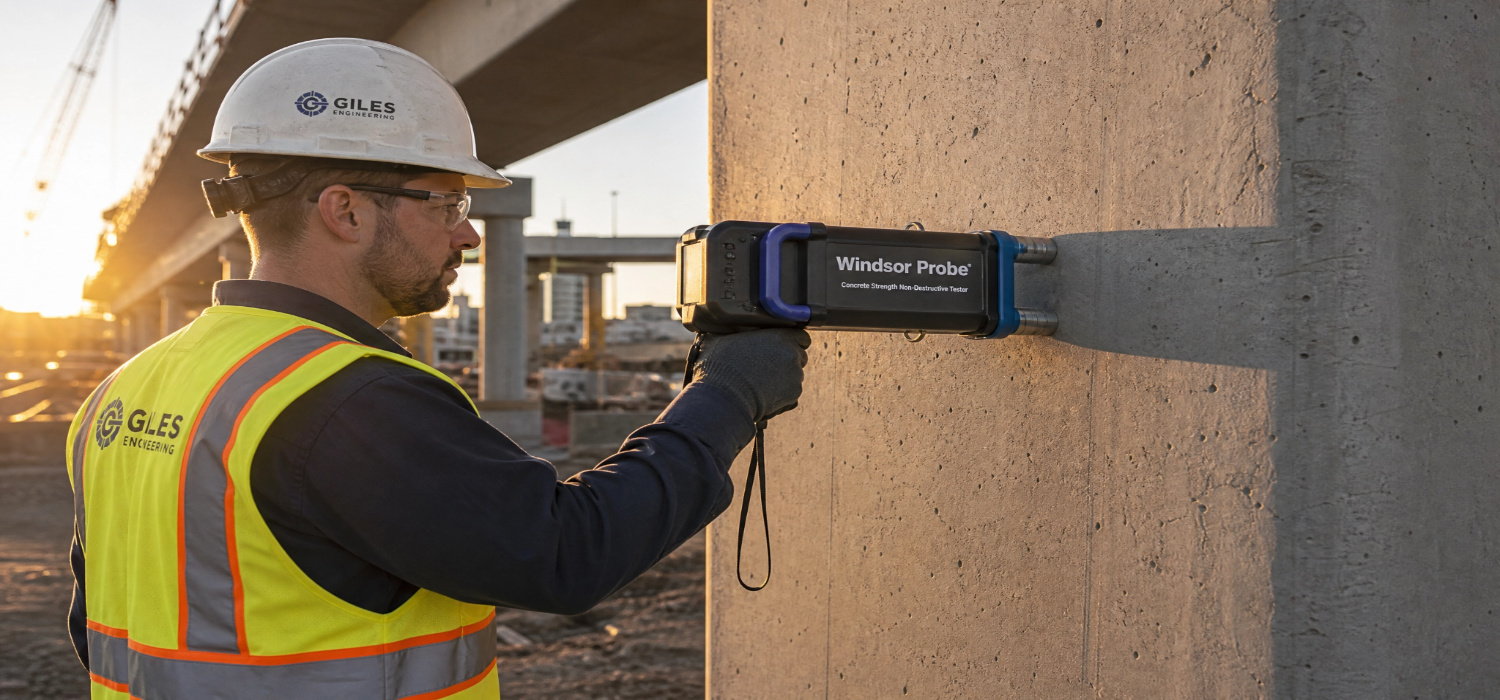

In-situ concrete testing has become an essential part of modern construction, structural engineering, and infrastructure maintenance. As buildings, bridges, industrial facilities, and transportation structures continue to grow in complexity, engineers need accurate ways to determine whether concrete can safely perform under real-world conditions. Reliable testing methods are critical not only during construction but also throughout the lifespan of a structure to ensure safety, durability, and compliance with engineering standards.
Traditional concrete testing methods often involve extracting samples from the structure and sending them to a laboratory for analysis. While these methods can provide valuable information, they are time-consuming, expensive, and sometimes damaging to the structure itself. This is why non-destructive and minimally invasive solutions have gained significant importance in the construction industry.
Among these advanced solutions, the Windsor Probe ASTM C-803 method has become one of the most trusted tools for evaluating hardened concrete. Designed to estimate compressive strength through penetration resistance, the Windsor Probe offers a fast, accurate, and practical way to assess concrete directly on-site. Its ability to provide dependable results with minimal disruption has made it a preferred choice for engineers, contractors, inspectors, and property owners alike.
From quality control in new construction to evaluating aging infrastructure and fire-damaged concrete, the Windsor Probe continues to play a major role in modern in-situ concrete testing applications. As the demand for efficient and reliable structural assessment grows, this technology remains one of the most dependable solutions available in the field of concrete evaluation.
What Is In-Situ Concrete Testing?
In-situ concrete testing refers to the process of evaluating concrete directly within an existing structure rather than relying solely on laboratory-cured samples. The goal is to determine the actual strength, condition, and performance of the concrete in its real operating environment.
Concrete may behave differently in the field than it does in laboratory conditions. Factors such as curing temperature, moisture exposure, placement techniques, environmental conditions, and long-term loading can all influence the final strength and durability of the material. Because of this, in-situ testing provides a more realistic assessment of how concrete is performing within the structure itself.
This type of testing is commonly used in:
- Commercial construction projects
- Industrial facilities
- Bridges and highways
- Parking structures
- Residential developments
- Structural rehabilitation projects
- Infrastructure maintenance programs
In-situ concrete testing helps engineers verify compressive strength, identify deterioration, assess safety, and make informed decisions regarding repairs or renovations.
The growing need for faster and less destructive testing methods has made technologies like the Windsor Probe increasingly valuable across the construction industry.
Understanding the Windsor Probe ASTM C-803 Method
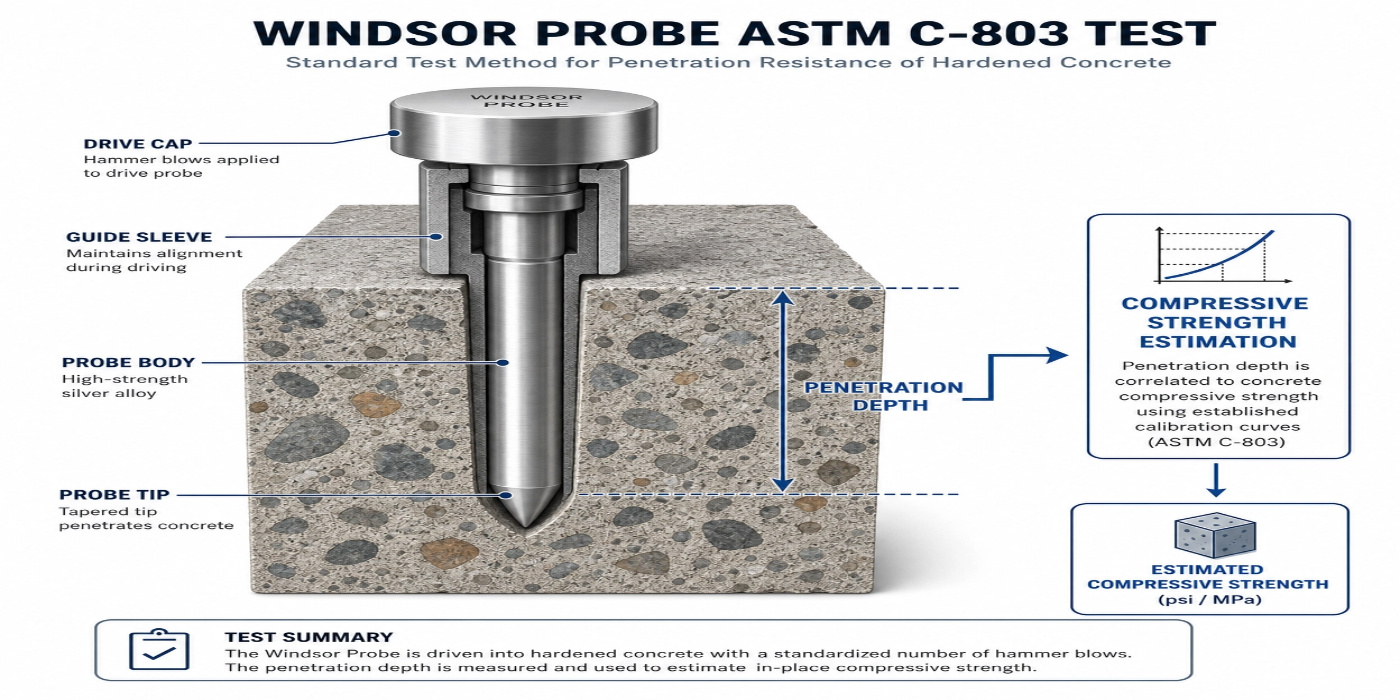
The Windsor Probe test is a standardized method used to estimate the compressive strength of hardened concrete. Conducted according to ASTM C-803 standards, the test measures the penetration resistance of concrete by driving a hardened alloy probe into the surface using a controlled amount of force.
The concept behind the test is simple. Stronger concrete resists penetration more effectively than weaker concrete. By measuring how deeply the probe penetrates into the concrete, engineers can estimate the compressive strength of the material with a high degree of accuracy.
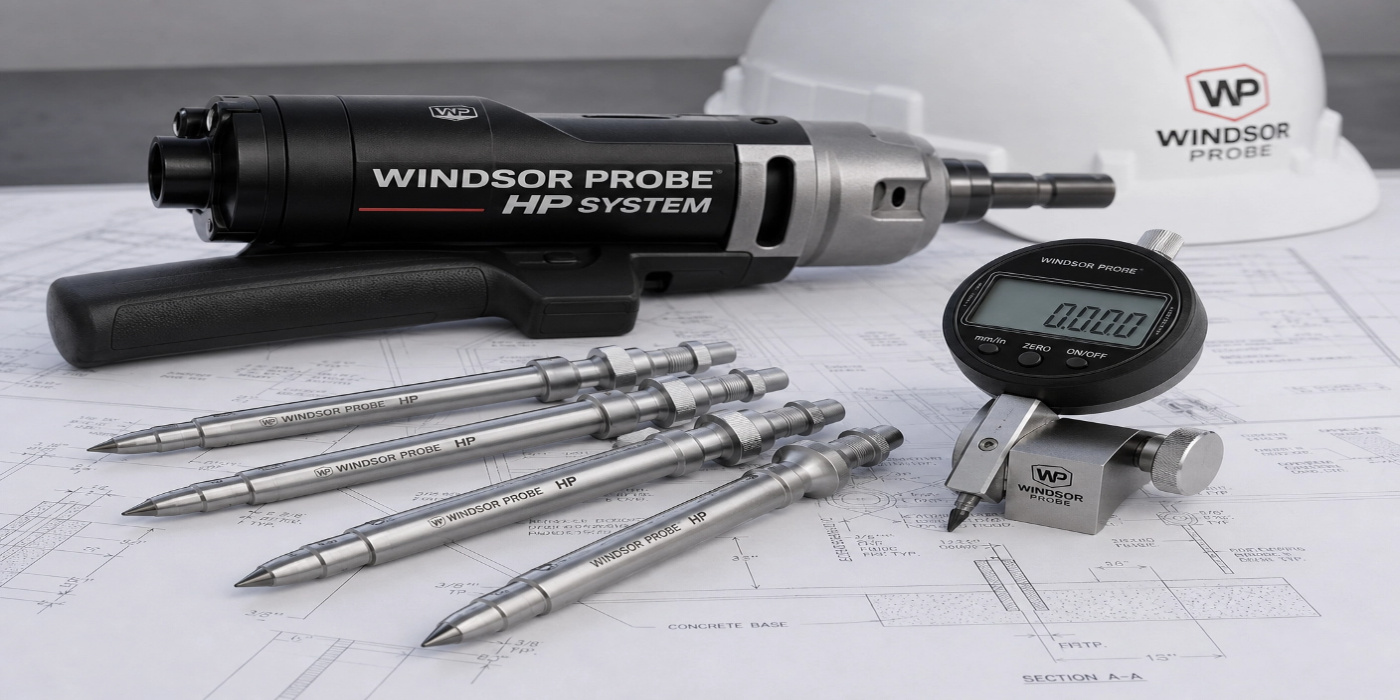
The Windsor Probe system generally includes:
- A powder-actuated driver unit
- Hardened alloy probes
- A measuring gauge
- Calibration charts for data interpretation
During testing, the probe is driven into the concrete surface. After penetration, the exposed probe length is measured and compared with standardized calibration charts to determine the estimated concrete strength.
Modern systems such as the Windsor Probe HP System Z-WP1000 can evaluate concrete strengths up to 17,000 PSI, making them suitable for both conventional and high-strength concrete applications.
Why the Windsor Probe Is Widely Trusted
The Windsor Probe has earned a strong reputation in the construction and engineering industries because it combines speed, reliability, and practicality. It provides dependable strength evaluations while minimizing structural damage and project delays.
ASTM Standard Compliance
One of the key reasons the Windsor Probe is trusted worldwide is its compliance with ASTM C-803 standards. ASTM standards establish recognized procedures that ensure testing consistency and accuracy.
Using ASTM-compliant methods helps engineers, contractors, and inspectors rely on the results with greater confidence. Standardized testing also supports quality control programs and regulatory compliance requirements.
Accurate On-Site Evaluation
Unlike laboratory testing, which evaluates separate concrete samples, the Windsor Probe assesses the actual concrete within the structure itself.
This provides a more realistic understanding of the structure’s performance because the test reflects real-world curing conditions, environmental exposure, and load history.
For engineers evaluating existing buildings or infrastructure, this on-site accuracy is extremely valuable.
Fast Testing Process
Construction and rehabilitation projects often depend on timely strength evaluations. Delays in testing can impact schedules, labor costs, and project timelines.
The Windsor Probe delivers rapid results directly on-site, allowing engineers and contractors to make decisions quickly without waiting for lengthy laboratory analysis.
Minimal Structural Damage
Traditional testing methods, such as concrete coring, require removing physical samples from structural elements. This can weaken the structure and require repair work afterward.
The Windsor Probe creates only small probe penetrations, making it a minimally invasive solution. This is especially important for occupied buildings, bridges, and infrastructure, where structural disruption must be minimized.
Effective for High-Strength Concrete
Modern construction increasingly uses high-performance concrete designed for greater durability and load resistance.
The Windsor Probe HP System is capable of evaluating high-strength concrete applications up to 17,000 PSI, making it suitable for demanding commercial and industrial projects.
Common Applications of Windsor Probe Testing
The versatility of the Windsor Probe makes it useful for a wide range of structural and infrastructure applications.
Structural Analysis
Engineers use Windsor Probe testing to evaluate the strength of columns, slabs, beams, and walls. This helps determine whether structural elements can safely support design loads and future modifications.
Existing Building Assessments
Before renovation or expansion projects begin, engineers often need to assess the strength and condition of the existing concrete. The Windsor Probe allows these evaluations to be completed efficiently without major demolition or disruption.
Infrastructure Inspection
Bridges, parking garages, tunnels, and transportation structures experience constant stress from traffic loads and environmental conditions.
Routine in-situ concrete testing helps identify deterioration and supports preventive maintenance planning.
Fire-Damaged Concrete Evaluation
High temperatures can weaken concrete and compromise structural safety. After a fire event, engineers must determine whether the structure remains stable.
The Windsor Probe provides valuable information about the remaining strength of fire-damaged concrete and helps guide repair decisions.
Quality Control During Construction
Contractors and engineers often use Windsor Probe testing to confirm that concrete has reached the required strength before proceeding with additional construction activities.
This helps maintain quality standards and reduces the risk of structural issues later in the project.
Windsor Probe vs Traditional Concrete Testing Methods
Several methods are available for measuring concrete strength, but the Windsor Probe offers unique advantages compared to traditional techniques.
Core Testing
Core testing involves extracting cylindrical concrete samples and analyzing them in a laboratory.
Although accurate, this method is destructive, labor-intensive, and time-consuming. The extraction process also leaves holes that require repair.
The Windsor Probe provides a faster and less damaging alternative for estimating concrete strength directly on-site.
Rebound Hammer Testing
Rebound hammer testing measures surface hardness and is commonly used for quick inspections.
However, rebound hammer results can be influenced by surface texture, carbonation, and moisture conditions. Because the Windsor Probe measures penetration resistance within the concrete, it often provides more dependable strength estimates.
Ultrasonic Pulse Velocity Testing
Ultrasonic testing evaluates concrete quality by measuring the speed of sound waves through the material.
While useful for detecting cracks and voids, it may not directly estimate compressive strength as effectively as the Windsor Probe. For many projects, the Windsor Probe offers the ideal balance of speed, practicality, and reliable strength evaluation.
Factors That Influence Windsor Probe Results
Like any testing method, Windsor Probe results can be affected by certain variables. Understanding these factors is important for accurate interpretation.
Key influencing factors include:
- Aggregate hardness
- Surface condition
- Concrete age
- Moisture content
- Probe orientation
- Operator technique
Because of these variables, testing should always be performed by experienced professionals using calibrated equipment and proper ASTM procedures.
Professional testing companies understand how to interpret results accurately and account for environmental and material conditions that may affect measurements.
The Importance of Professional Concrete Testing Services
Concrete strength evaluation is critical for structural safety, construction quality, and long-term performance. Inaccurate testing can lead to costly repairs, delays, or even structural failure.
Professional concrete testing providers use advanced equipment, trained technicians, and industry-standard procedures to deliver dependable results.
Experienced testing services help clients:
- Verify structural integrity
- Meet regulatory standards
- Support renovation planning
- Improve quality assurance
- Reduce long-term maintenance risks
- Make informed engineering decisions
Using advanced systems like the Windsor Probe HP System Z-WP1000 further enhances testing efficiency and accuracy.
Why Concrete Insight Is a Trusted Choice
Concrete Insight provides advanced in-situ concrete testing services using the Windsor Probe ASTM C-803 method. By utilizing the modern Windsor Probe HP System Z-WP1000, the company delivers accurate and efficient concrete strength evaluations for a variety of applications.
Concrete Insight supports:
- Structural analysis
- Standard concrete strength determination
- High-strength concrete testing
- Infrastructure inspection
- Construction quality control
With a strong focus on precision, safety, and ASTM-compliant procedures, Concrete Insight helps engineers, contractors, and property owners confidently evaluate the condition and performance of their structures.
The company’s expertise in non-destructive testing ensures reliable results while minimizing structural disruption and project downtime.
Conclusion
As the construction industry continues to evolve, accurate concrete evaluation remains essential for ensuring structural safety, durability, and long-term performance. In-situ concrete testing provides engineers and contractors with valuable insight into the actual condition of concrete within a structure, allowing them to make informed decisions without relying solely on laboratory samples.
Among the available testing methods, the Windsor Probe ASTM C-803 system has proven to be one of the most trusted and practical solutions for measuring hardened concrete strength. Its ability to provide fast, reliable, and minimally invasive evaluations makes it highly valuable for commercial buildings, industrial facilities, bridges, parking structures, and infrastructure projects.
From assessing high-strength concrete to supporting rehabilitation projects and quality control inspections, the Windsor Probe continues to play an important role in modern structural evaluation.
For organizations seeking dependable and professional in-situ concrete testing services, advanced Windsor Probe technology offers an efficient and accurate solution that supports both safety and performance in today’s demanding construction environment.
Comments